
The Ultimate SEO Guide for Orlando Businesses (2026 Edition)

Most SEO guides feel like they were written for everyone, which means they were written for no one.
This one is for Orlando businesses. Business owners in retail corridors off International Drive. Service companies covering Orange, Seminole, and Osceola counties. E-commerce brands based in Central Florida are competing nationally. Businesses that need their phone ringing from people in a 30-mile radius, not from someone in Atlanta or Seattle who found them by accident.
SEO looks different depending on where you're competing and what you're competing for. After building 500+ websites and generating over $100 million in client revenue since 2001, here's what I can tell you: the fundamentals haven't changed as much as the noise suggests. But the stakes are higher. And there's a layer most Orlando businesses aren't accounting for yet.
This guide covers all of it.
Why Orlando SEO Is Its Own Game
Orlando is not a simple market. You have national tourism and hospitality brands dominating broad search terms, a rapidly expanding residential population pushing demand for local services, and a tech and SaaS corridor growing in Lake Nona and downtown that most generic SEO guides don't think about.
Ranking for "contractor Orlando" or "web design company Orlando" requires a different approach than ranking for those terms in a smaller market. Domain authority matters more here. Local signals matter even more. The gap between a well-built site and a neglected one is wider than it would be in, say, Ocala.
A contractor who serves Dr. Phillips and Windermere is competing in a very different market than one focused on east Orange County. A restaurant on International Drive has different local signals to build than a service company covering Oviedo and Sanford. The specifics of where you sit within Orlando matter to how Google weights proximity in its local algorithm.
The good news: most of your local competitors are leaving real ground unclaimed. Their websites are slow. Their schema is wrong or missing. Their Google Business Profiles are half-finished. Their content hasn't been touched since before the pandemic.
That's your opening.
The Three-Layer Framework
There's a tendency to treat SEO like painting a room. You do it once and move on. That's not how it works.
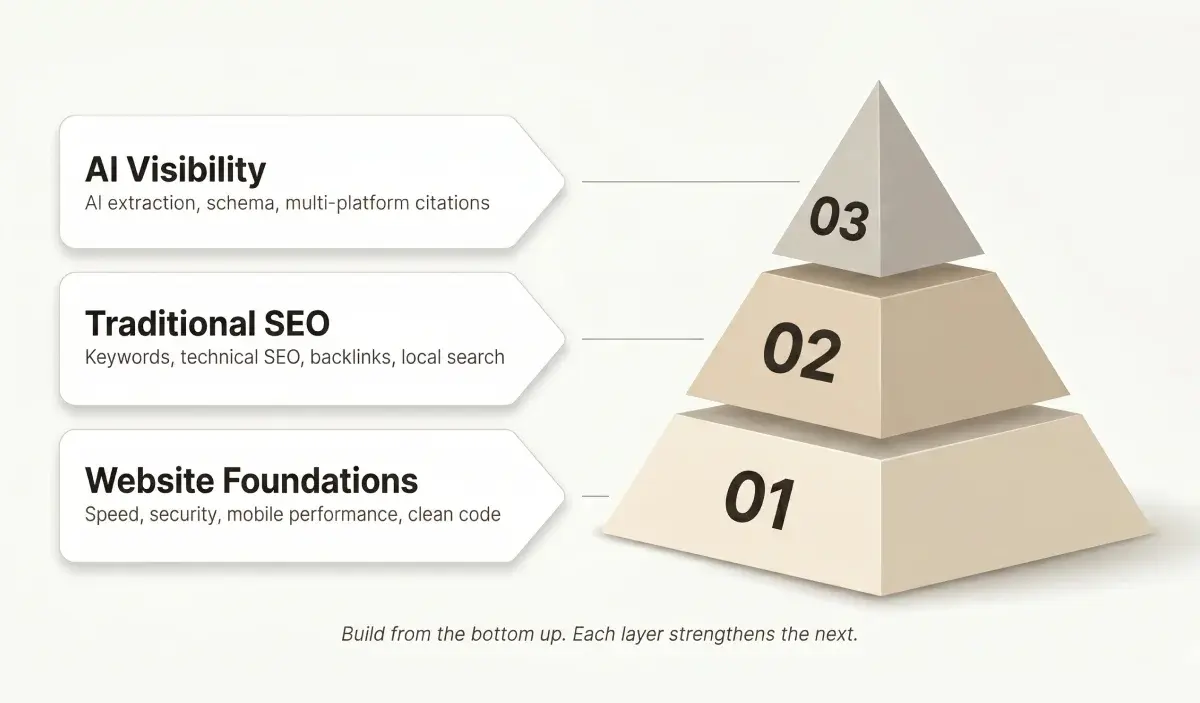
Lasting search visibility for an Orlando business requires three layers working together:
Layer 1: Website Foundations. Your site has to be technically sound before anything else matters. Speed, mobile performance, crawlability, Core Web Vitals, schema markup, URL structure. Building on a cracked foundation is why so many businesses spend money on SEO and get nothing in return.
Layer 2: Traditional SEO. On-page optimization, keyword strategy, local citations, link building, relevant content, and Google Business Profile. This is what most people mean when they say "SEO."
Layer 3: AI Visibility. The layer that almost no Orlando businesses have addressed yet, where the most meaningful competitive advantage sits right now. More on this at the end.
If your current SEO effort only touches Layer 2 without Layer 1 being solid (or skips Layer 3 entirely), you're leaving revenue behind.
Part 1: Website Foundations

Site Speed Is a Revenue Problem
Studies have confirmed that as page load time increases from 1 to 5 seconds, the probability of a visitor bouncing increases to over 60%. For a local service business relying on organic traffic, that number is not abstract. Those are leads that almost called you.
In 2026, "site speed" has a more specific meaning than it used to. Google measures speed through Core Web Vitals, three signals that together tell Google how a real user experiences your page:
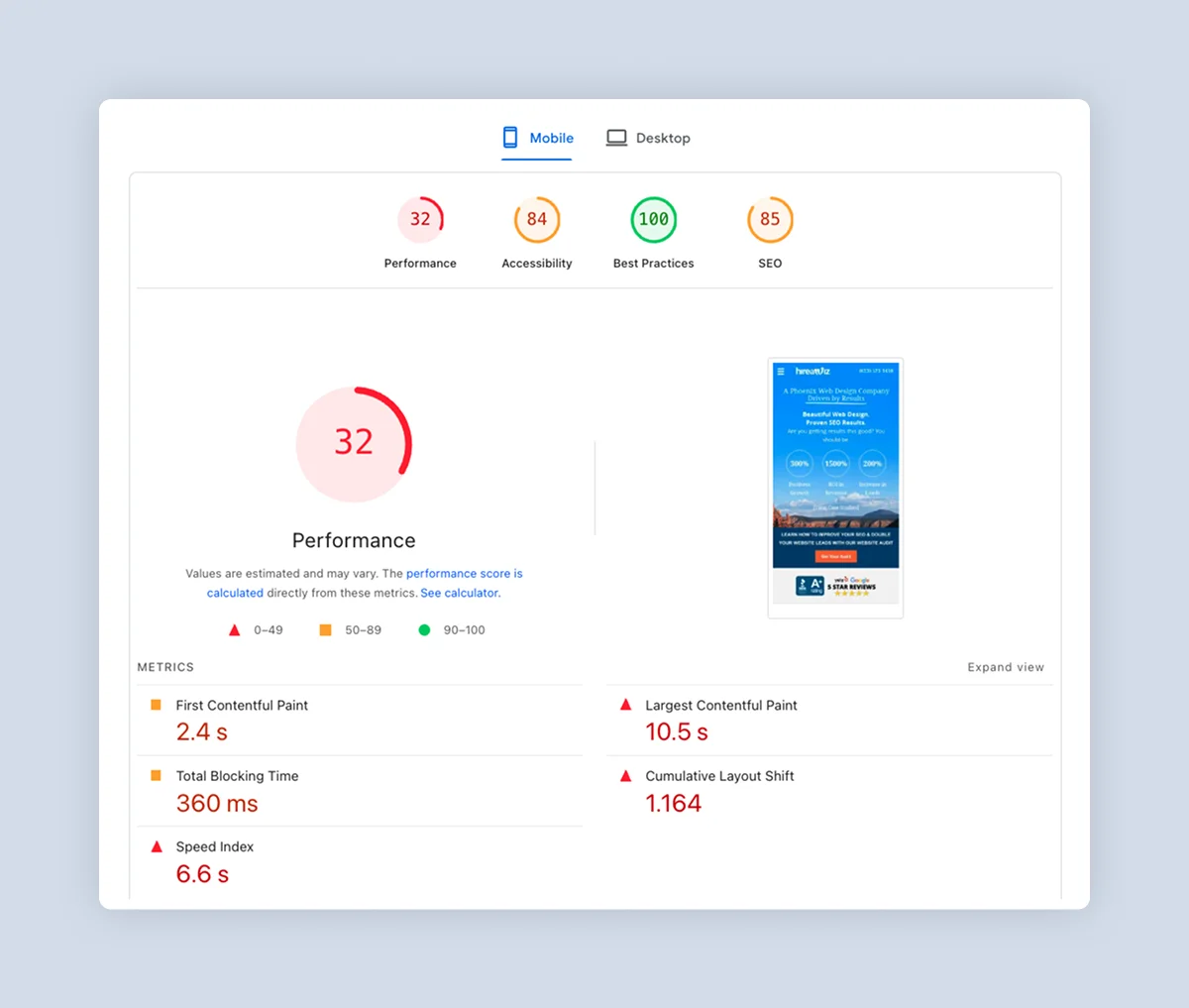
Largest Contentful Paint (LCP) measures how long it takes for the main content of a page to appear. Google's threshold is under 2.5 seconds. Anything above 4 seconds is considered poor. If your homepage hero image takes four seconds to load, that's a failing LCP score and a ranking signal working against you.
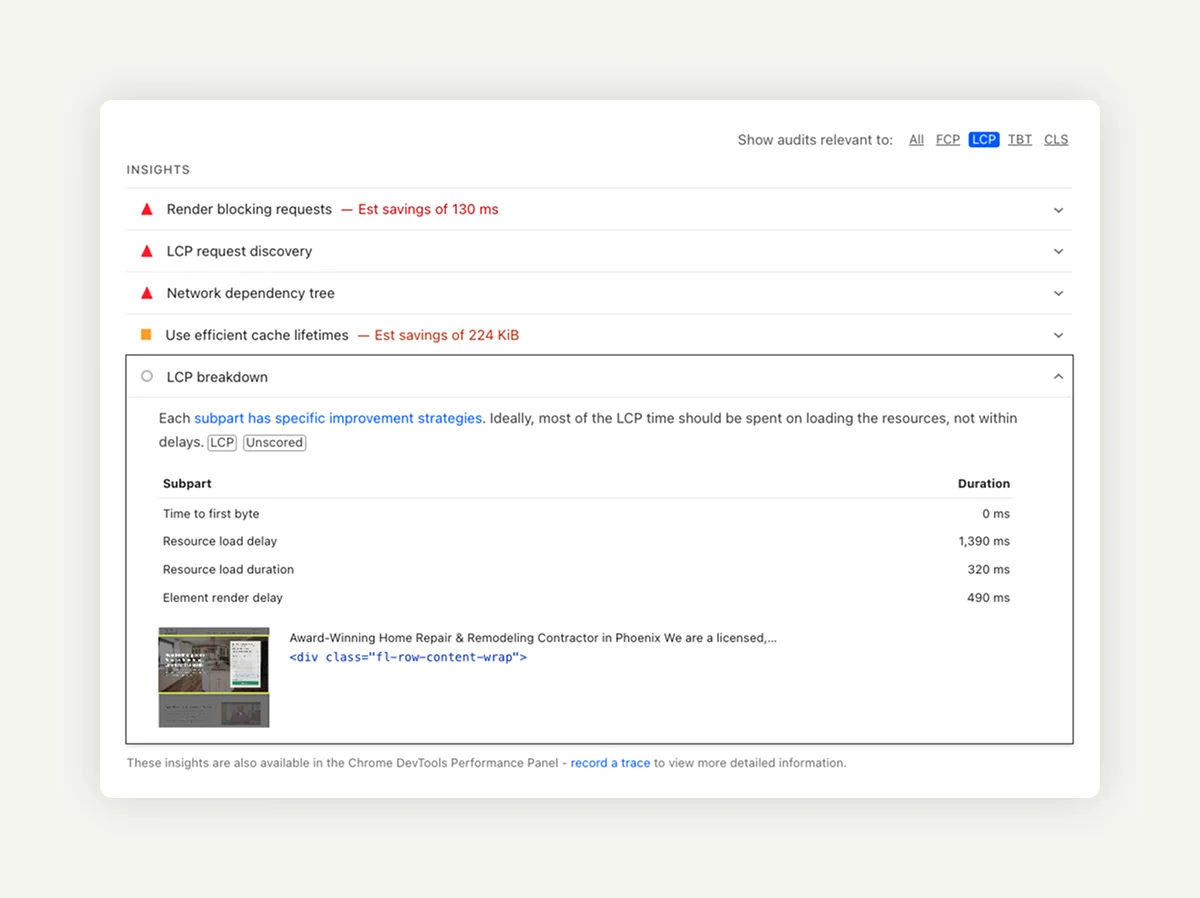
Cumulative Layout Shift (CLS) measures how much the page visually jumps while loading. Target: under 0.1. You know that experience where you're about to tap a button and the page shifts so you accidentally tap something else? High CLS. Google penalizes it because it's a genuinely bad experience.
Interaction to Next Paint (INP) replaced the old FID metric in 2024. It measures how quickly your page responds when someone taps, clicks, or types. Target: under 200 milliseconds. Slow INP is common on sites with too many scripts running in the background.
You can check all three scores for free. Google PageSpeed Insights (pagespeed.web.dev) gives a full breakdown with specific fixes. GTmetrix provides waterfall data that identifies exactly which resources are causing slowdowns.
Not sure where your site stands?
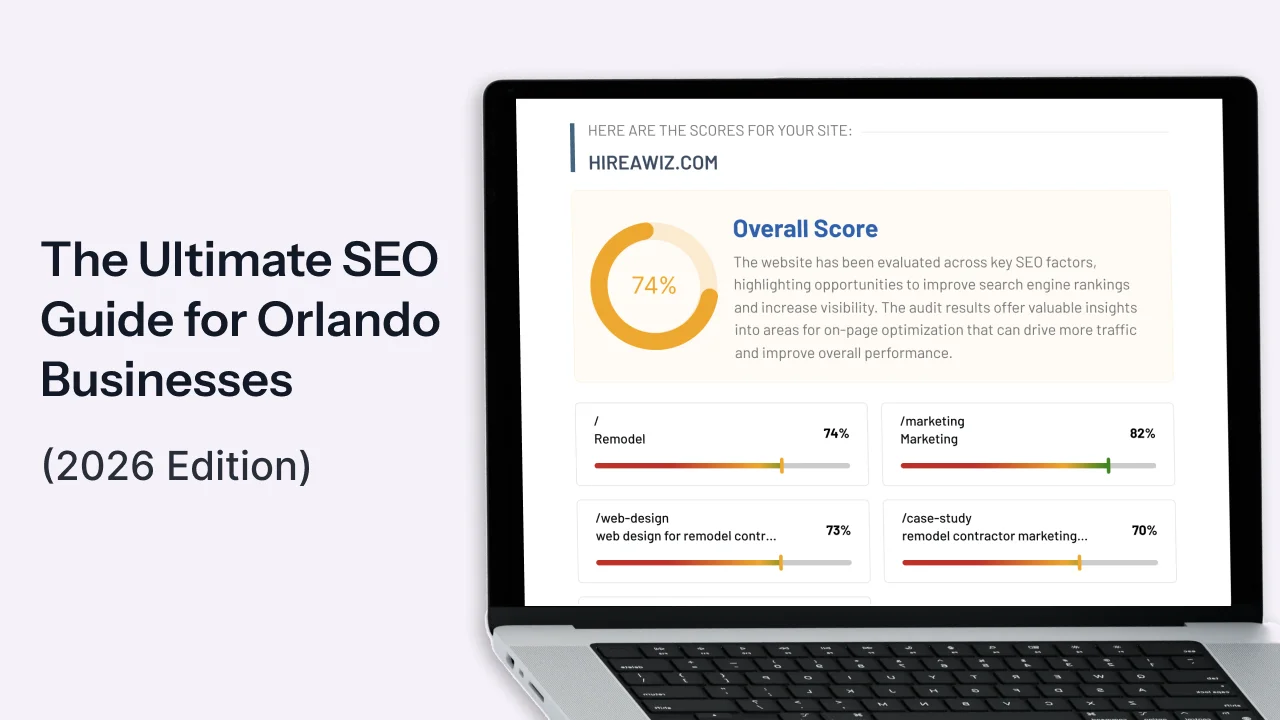
Our free website audit covers all three Core Web Vitals plus 40+ other technical and SEO factors.
The most common culprits I see on Orlando business sites:
Unoptimized images. A homepage with slider images that haven't been compressed will slow any page down. Serve images in modern formats like WebP, sized for the device they're displayed on. Every image also needs a descriptive alt tag. That's both an accessibility requirement and a direct SEO signal.
Vague image filenames. Google can't "see" images the way a human can. It relies on file names and alt text to understand what an image contains. An image saved as IMG_4582.jpg tells Google nothing. The same image saved as orlando-kitchen-remodel-before-after.jpg is clear. Rename images before uploading them. It takes thirty seconds, and most people never do it.
Hosting that's underbuilt for the site. Shared hosting was fine for a five-page brochure site. A 50-page WordPress site with WooCommerce needs managed hosting. This is one of the least glamorous conversations we have with new clients, but one of the highest-impact.
Plugin bloat. Every plugin adds weight. Audit what's actually running on your site. There are almost certainly plugins doing things you no longer needed a year ago.
A realistic target: under three seconds on a mobile connection, passing all three Core Web Vitals thresholds.
Mobile-First Is Not a Feature. It's the Default.
Google switched to mobile-first indexing permanently. That means Google looks at the mobile version of your site when deciding how to rank it, not the desktop version. If your mobile experience is weak, your rankings suffer across all devices.
Check your mobile usability in Google Search Console under the "Experience" section. Any flagged issues should be treated as urgent.
Navigation: If Google Can't Find It, Google Can't Rank It
Search engine crawlers follow links. If a page on your site isn't linked to from anywhere, crawlers either won't find it or won't consider it worth indexing. Every page that matters to your business should be reachable in two clicks or fewer from your homepage.
In practice:
- Main service pages belong in your top navigation, not buried three levels deep in a dropdown
- If you serve multiple areas (Orlando, Winter Park, Kissimmee, Lake Mary), those location pages need visible links
- A clean XML sitemap submitted through Google Search Console gives crawlers a roadmap when internal linking has gaps
Schema Markup: The Signal Most Orlando Businesses Are Missing
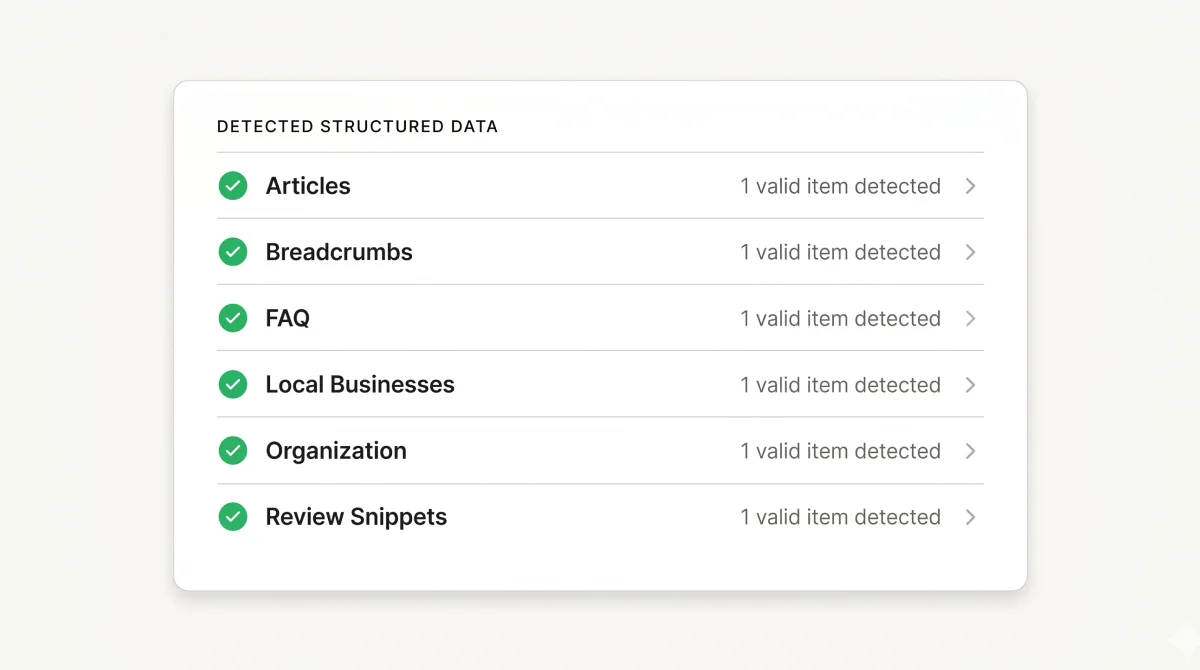
Schema markup is code added to your site that tells search engines exactly what your business is, where it's located, what it does, its hours, and its reviews. Not visible to visitors. It's a direct communication to Google, and increasingly to AI platforms.
For local Orlando businesses, the schema types that matter most:
- LocalBusiness (with your correct Orlando address, phone number, and service area)
- Service schema on individual service pages
- FAQ schema on content-heavy pages (triggers rich results in Google)
- Review schema to display star ratings in search results
- Article schema on blog posts
Here's what surprises most business owners when we run an audit: a large share of websites have schema that references an old address, a wrong phone number, or nothing at all. If your schema says one thing and your Google Business Profile says another, you're sending conflicting signals. Search engines don't reward confusion. They ignore it.
URL Structure: Keep It Clean

Your URL should tell a human and a search engine what the page is about before they visit it.
hireawiz.com/orlando-seo-company is clear.
hireawiz.com/?p=2847&category=services&type=digital is not.
Clean URLs also matter when pages are moved or renamed. Change a URL without adding a 301 redirect, and any ranking that page had built disappears. We see this constantly after website redesigns, where no one tracked what existed before.
Duplicate Content: The Quiet Rankings Killer
Google has said directly that you should avoid duplicate or near-duplicate content across your site. This applies to title tags, meta descriptions, service pages, landing pages, and image alt text. Every page that matters needs unique content.
This becomes a real problem for businesses with multiple location pages, where each page says nearly the same thing with just the city name swapped. Google recognizes that pattern and doesn't reward it. Either write genuinely distinct content for each location page, or use canonical tags to tell Google which version is the primary one.
Part 2: On-Page SEO That Actually Moves Rankings
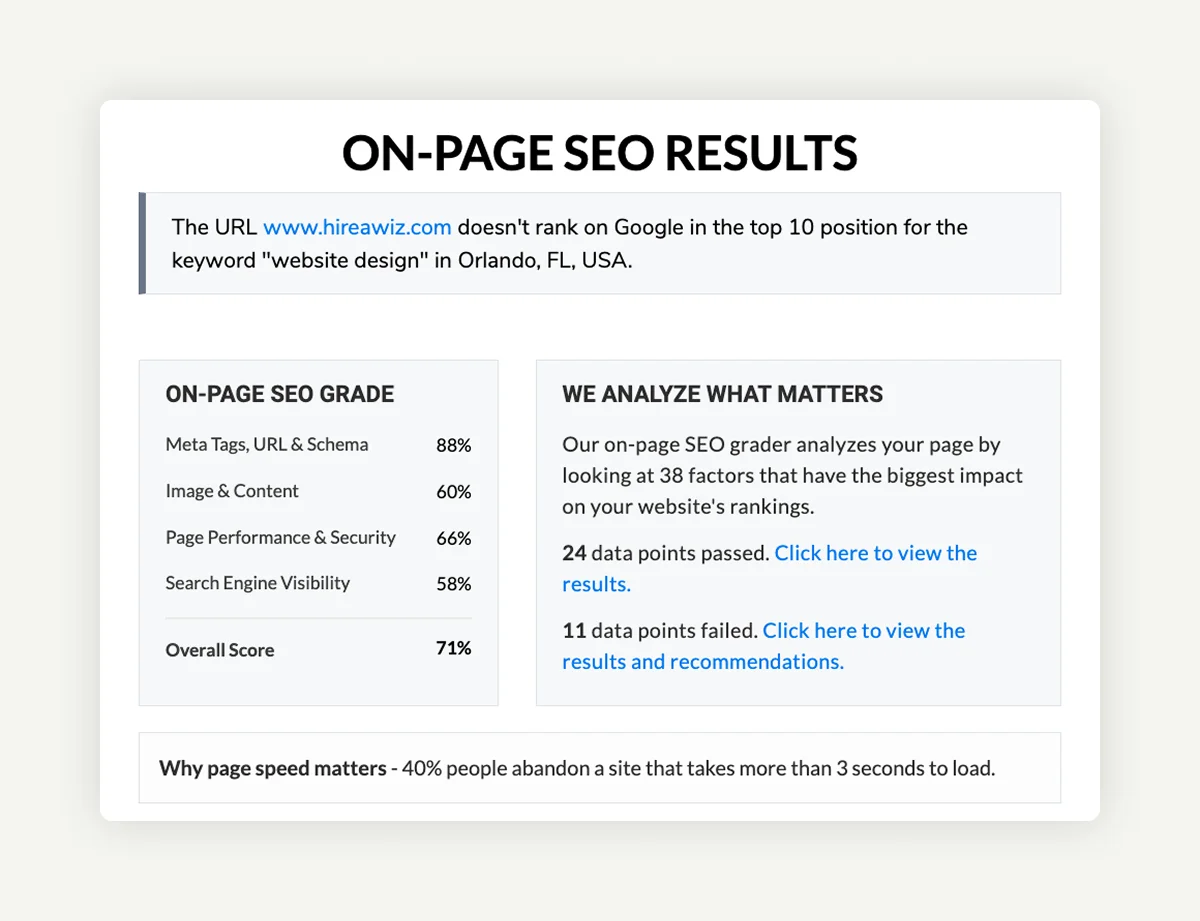
Start With What Your Customers Actually Type
Most business owners approach keyword research from the inside out. They think about how they describe their services and optimize for those terms. Their customers search differently.
A homeowner who needs their roof replaced doesn't search "premium roofing installation services Central Florida." They search "roof replacement Orlando" or "roofing contractor near me." The gap between how businesses describe themselves and how customers search for them is where much of SEO investment is wasted.
The concept you need to understand right now is search intent. Before you target a keyword, understand what the person searching it is actually trying to do. Four intent types:
- Informational: "How much does a roof replacement cost in Florida?" (answer this with a blog post)
- Navigational: "HireAWiz Orlando" (they're looking for you specifically)
- Commercial: "Best web design companies Orlando" (they're evaluating options)
- Transactional: "Orlando web design company free quote" (they're ready to buy)
Your service pages should target transactional and commercial intent keywords. Blog content should target informational intent. Matching keyword to intent is one of the highest-leverage moves in SEO. Most businesses get it completely backward.
The tools worth using for Orlando keyword research:
Google Search Console (free) shows you exactly what terms people are already finding you for and where you rank. If you aren't in Search Console yet, that's the first thing to fix. Nothing else matters until you have this data.
Google Keyword Planner (free with a Google Ads account) gives you monthly search volume data and related keyword ideas.
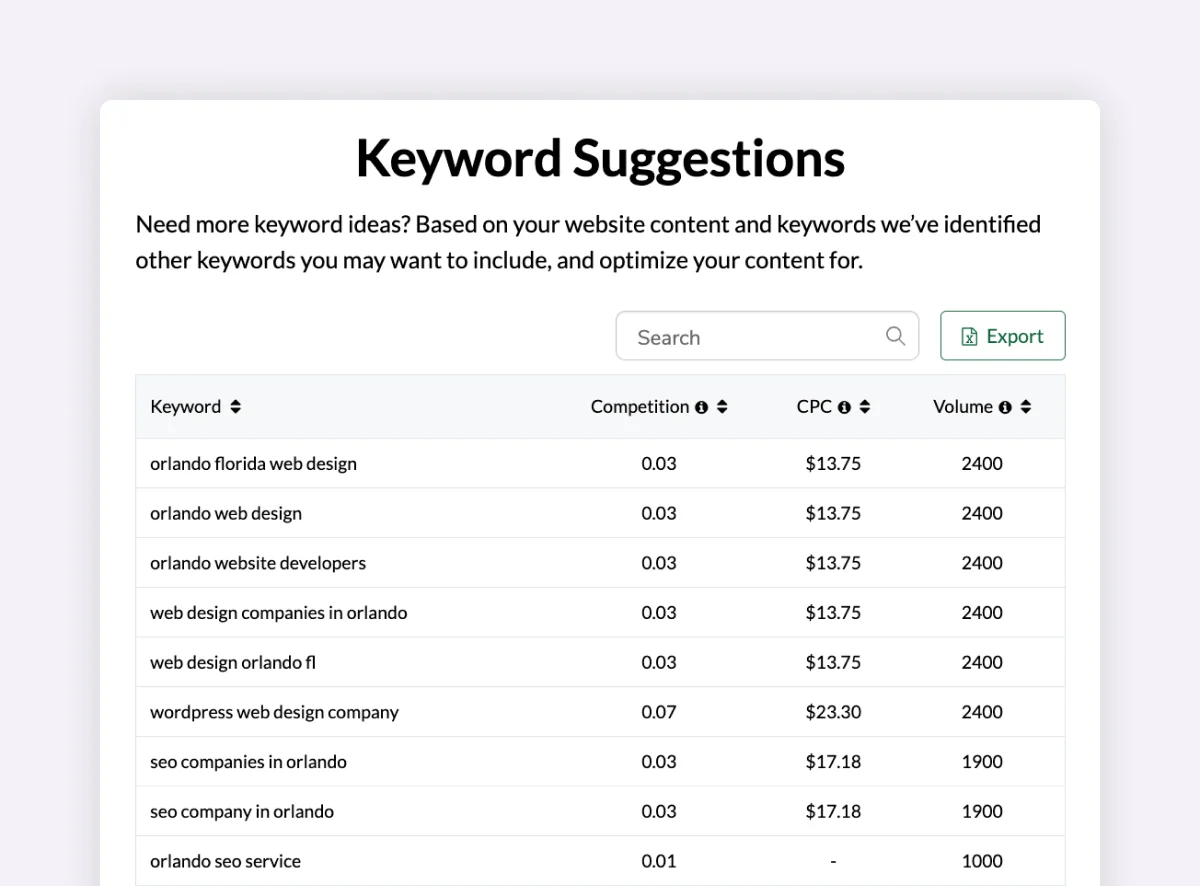
Google autocomplete and "People also ask" is often the fastest route to understanding how real people phrase questions. Search your main service keyword and note every autocomplete suggestion. Those are real queries from real people in your area.
Want to see which keywords you're close to ranking for but not quite hitting page one?
Our free SEO audit shows exactly where the biggest ranking opportunities are.
For Orlando businesses specifically, identify three categories:
- Primary local terms: "[your service] Orlando" and "[your service] near me"
- Suburb and neighborhood terms: Winter Park, Kissimmee, Lake Nona, Altamonte Springs, Sanford, Oviedo, depending on your service area
- Problem-based terms: What question does someone ask right before they need your service?
One focused keyword per page. Trying to rank a single page for fifteen variations spreads the signal too thin. Build pages with focus.
Where to Put Your Keywords
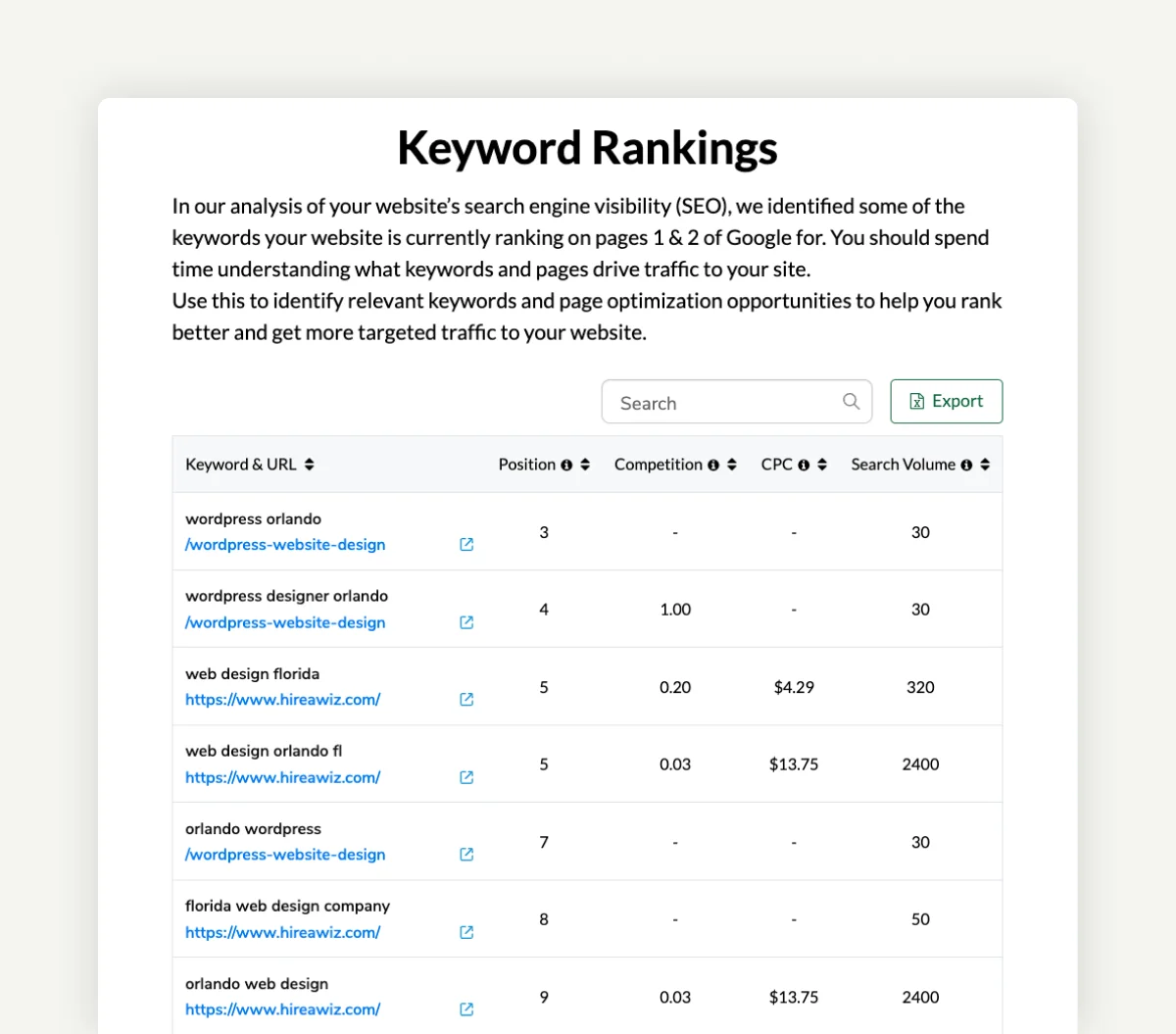
Knowing your keywords is step one. Knowing where to place them is where most businesses fall short.
Google puts more weight on terms that appear early in a page. For each page you're targeting:
- Title tag: Lead with your main keyword. "Orlando Roofing Company | ABC Roofing" outperforms "ABC Roofing | Serving Central Florida" for the keyword "Orlando roofing company."
- First 100 words of body content: Mention your primary keyword naturally in the opening paragraph. Not crammed in. Worked in where it reads logically.
- H1: One H1 per page that includes your primary keyword.
- H2 subheadings: Supporting sections organized with H2s that include secondary keywords and natural variations.
- URL: Short, clean, and keyword-containing. /orlando-roofing-company beats /services/residential-and-commercial-roofing-florida.
- Meta description: Include the keyword, but write it as a reason to click, not as a keyword container.
- Image alt text and filenames: Descriptive and relevant to what the image actually shows.
Keyword repetition doesn't help beyond natural use and can hurt. Write for the person reading the page, cover the topic well, and the appropriate keyword density happens on its own.
Title Tags: Your Highest-Leverage On-Page Signal
Your title tag appears in Google search results as the clickable blue headline. It's one of Google's most heavily weighted on-page signals, and also the first impression a potential customer gets of your business before they visit your site.
Two rules that most businesses get wrong:
Front-load your keyword. Google gives more weight to words that appear early in the title. "Orlando Web Design Company | HireAWiz" outperforms "HireAWiz | Web Design Company in Orlando, FL" for someone searching "Orlando web design company."
Write for clicks, not just rankings. A title can rank on page one and still lose clicks to a competitor whose title is more compelling. A one percent improvement in click-through rate from search results is often worth as much as moving up one position in rankings. Titles that include numbers, specific outcomes, or year references tend to outperform generic ones.
Keep titles under 60 characters. Google truncates anything longer.
UX Signals: The Ranking Factor Most Businesses Miss
Here's something that surprises many business owners: how people behave on your site after arriving from Google affects your rankings.
Google monitors what's called "pogo-sticking." Someone clicks your result, doesn't find what they're looking for, and immediately bounces back to Google to click a competitor's result instead. Enough of that pattern, and Google concludes your page isn't a good answer to that search query. Rankings drop.
This is why conversion-friendly design and SEO are the same problem, not two separate ones. A page that loads fast, answers the question clearly, and doesn't frustrate the visitor will rank better than a technically polished page that's confusing to use.
Signals that indicate strong UX:
- Low bounce rate on pages where visitors should be engaging, not immediately leaving
- Time on page: visitors who spend meaningful time reading are signaling relevance
- Pages per session: users going deeper into your site indicate they found what they needed
Track these in Google Analytics. If a key service page has an organic bounce rate over 80%, something is wrong. Either the page isn't matching search intent, or the experience is driving people away.
Google Search Console: Non-Negotiable
If you don't have Google Search Console set up, you're flying blind. Full stop.
Search Console is Google's direct communication channel about your site's performance. Three reports to check on a regular schedule:
Performance shows how many people saw your site in search results (impressions), how many clicked, and what position you averaged for each keyword. This data is irreplaceable. If a page has 5,000 impressions but only 40 clicks, the ranking is there, but the title or description isn't earning the visit. Fix those before doing anything else.
Coverage shows which pages Google has indexed and which have errors. A page Google hasn't indexed won't rank for anything. "Crawl anomaly," "Server error," and "Submitted URL marked noindex" errors should be addressed immediately, not added to a backlog.
Core Web Vitals shows which pages pass or fail Google's speed thresholds, broken down by mobile and desktop. This is where you find which specific pages need technical work.
Search Console also sends manual action alerts if Google has penalized your site. Most businesses never see one. But if you do, knowing quickly is everything.
Setting up Search Console is step one. Understanding what the data actually means is a different skill.
If you'd like a plain-English interpretation of your Search Console data as part of our free audit, request yours here.
Internal Linking: The Tactic Most Sites Leave on the Table
Internal links (links from one page on your site to another) do two things: they help Google understand the hierarchy and structure of your content, and they pass authority from established pages to newer ones.
The approach that works:
Use keyword-rich anchor text. When you link to your Orlando SEO service page from a blog post, don't use "click here" as the link text. Use "Orlando SEO services" or "our SEO process." Google reads anchor text as a signal about what the linked page covers.
Link from older pages to new ones. Older pages have built up more authority over time. When you publish new content, link to it from relevant existing pages. This passes established authority to the new page faster than waiting for Google to discover it on its own.
Build a clear hub structure. Your main service pages should be linked to from multiple supporting pages: blog posts, FAQs, case studies. This tells Google those hub pages are the most important on your site. An Orlando roofing company's "Orlando Roofing Services" page should be linked from the blog post about roofing costs, the hurricane prep post, the about page, and the contact confirmation page.
Part 3: Local SEO for Orlando
Google Business Profile: Your Most Underused Asset
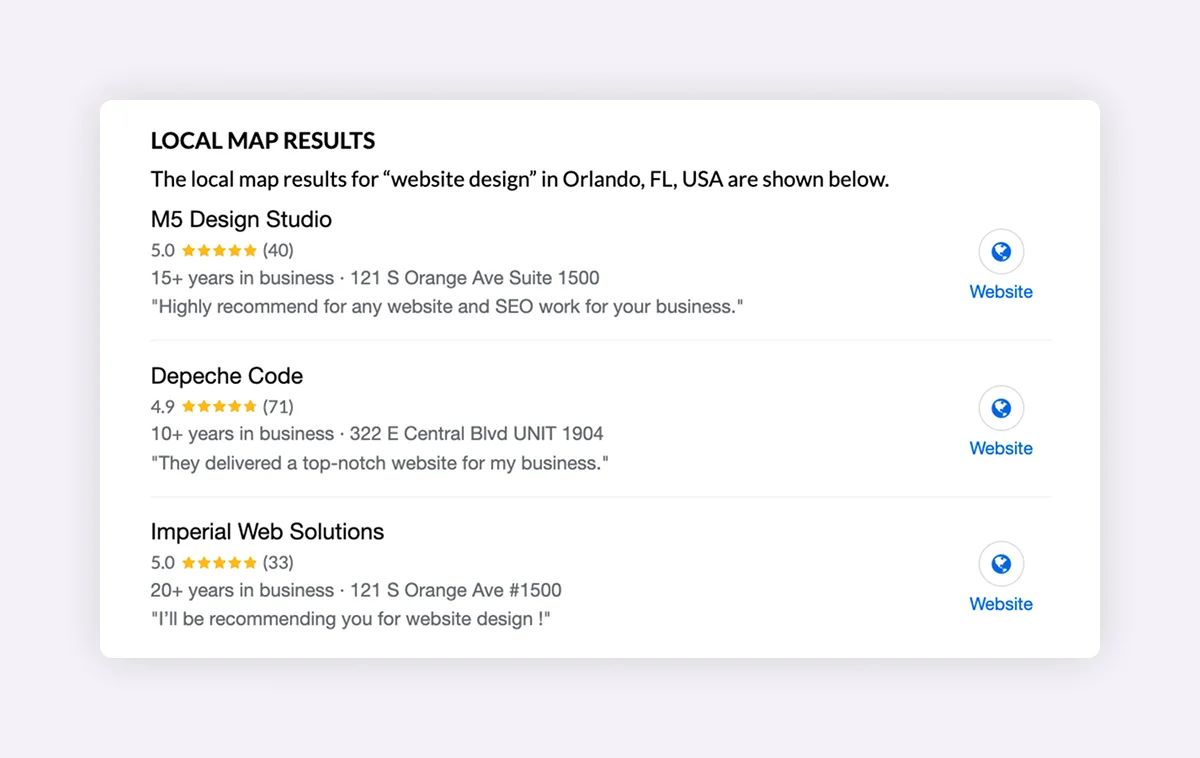
For any Orlando business serving customers locally, your Google Business Profile matters as much as your website. Some months it matters more.
GBP is what populates the map pack, the three businesses at the top of Google results when someone searches for a local service. Not in the map pack for your core keywords? You're invisible to a large slice of buyers who are ready to hire someone today.
What a well-built GBP actually requires:
Accurate NAP across every touchpoint. Name, address, phone number. These must be identical, not just similar, across your GBP, your website, and every directory listing. "Suite 100" and "Ste. 100" are different to Google's systems. Inconsistency suppresses local rankings in ways that are hard to diagnose if you don't know what to look for.
The right primary category. Your primary GBP category is the most important signal for what searches you appear in. Pick the most specific accurate category available, not the broadest one.
A complete profile. Business hours, website link, service descriptions, service areas, photos of your actual work (not stock images), and relevant attributes. Businesses with fully built-out GBP profiles consistently see 50% or more lift in calls and website visits compared to incomplete profiles. A complete profile outranks an incomplete one, all else being equal.
A real review strategy. Most businesses have no system for generating reviews. After every completed job or positive client interaction, follow up with a direct link to your GBP review form via text or email. Don't offer incentives. That violates Google's terms and can get your profile flagged. Just make it easy. Respond to every review, positive or negative. Responding signals to Google that the profile is active and the business cares about its reputation.
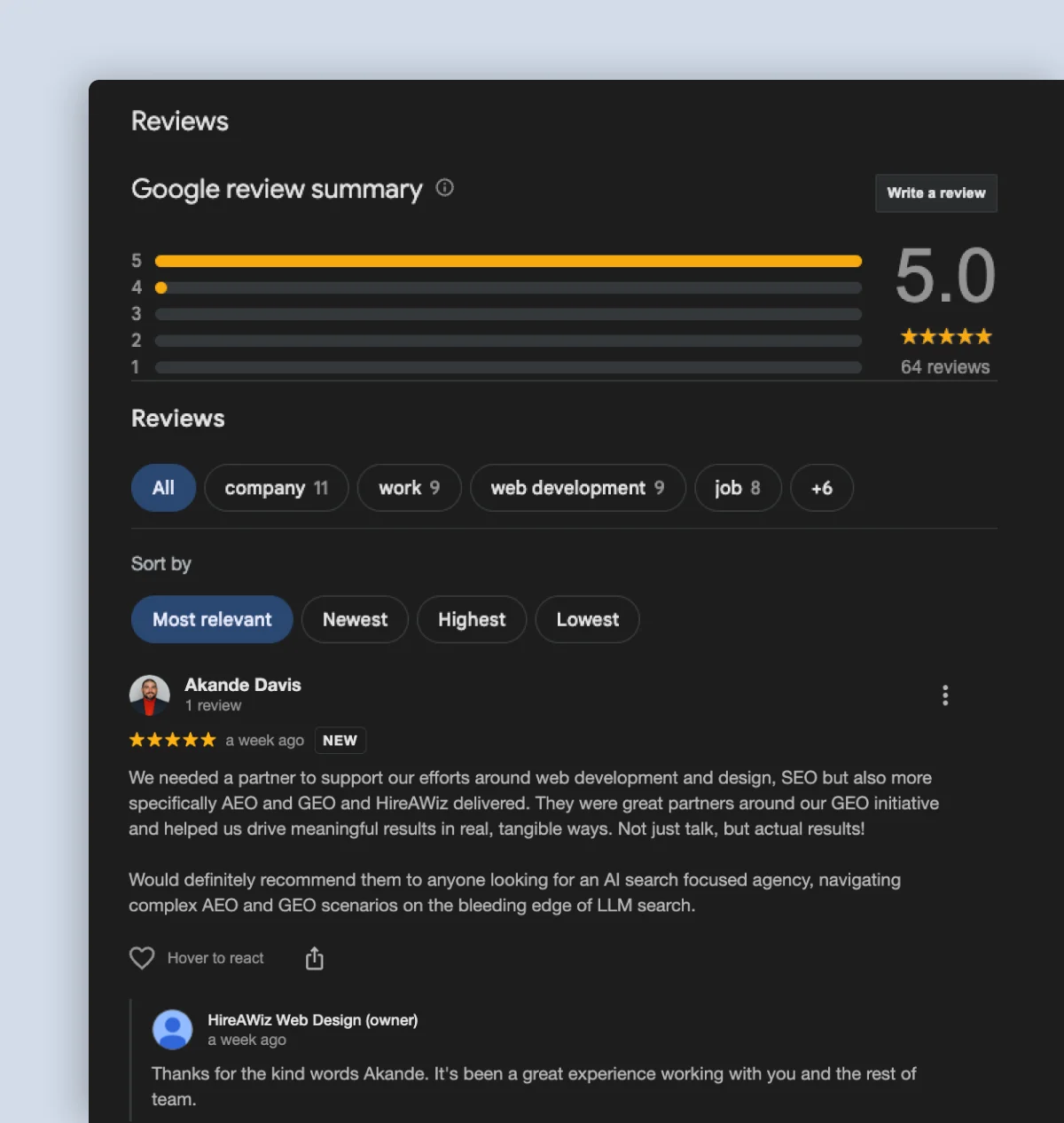
Regular posts. GBP lets you publish posts similar to social media. Most businesses never touch this feature. Businesses that post regularly signal an active, relevant presence to Google.
Local Citations: Get the Basics Right Before Anything Else
A citation is any online mention of your business name, address, and phone number. Yelp, the BBB, Angi, Houzz, and dozens of other directories all contribute to local SEO authority.
The quality standard here is consistency. Every listing should have identical NAP information. An old address on one directory, a different phone format on another, and a slightly different business name on a third creates conflicting signals. Search engines don't know which version to trust.
For Orlando businesses, work through citations in this order:
- Google Business Profile (foundational, do this first)
- Bing Places for Business
- Apple Maps
- Yelp
- Better Business Bureau
- Facebook Business Page
- Industry-specific directories: Houzz and Angi for home services, Clutch and DesignRush for service companies, Avvo for legal, GoodFirms for tech
Not sure where your citation profile has inconsistencies?
Our free website audit scans your business across dozens of directories and surfaces every discrepancy.
Know What You're Competing Against Before You Write Anything
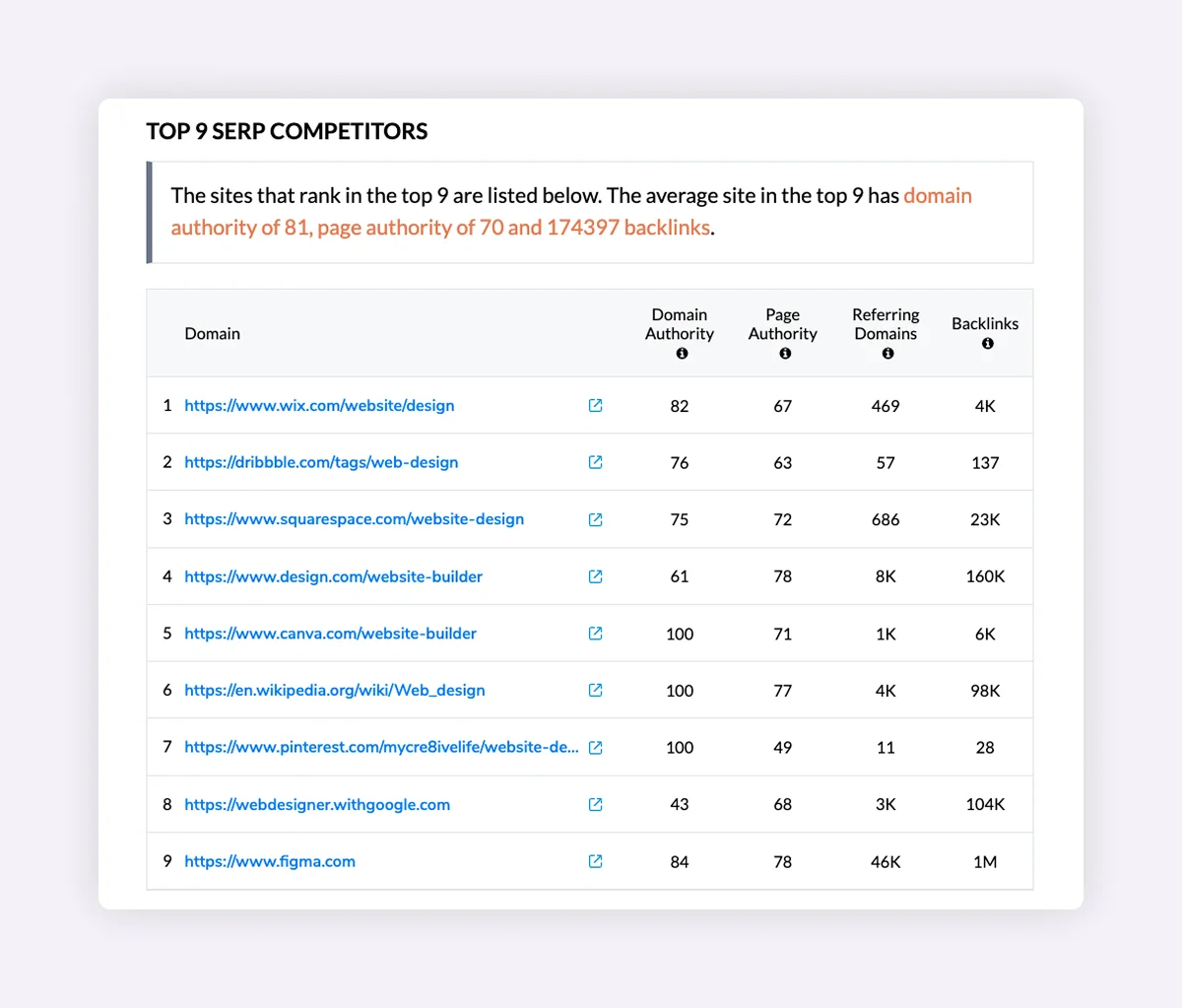
One step most Orlando businesses skip: study what's actually ranking for your target keywords before starting any optimization.
Search for your main service keywords and carefully review the first page of results. What kind of pages are ranking: service pages, blog posts, directories, or review aggregators? How detailed and thorough are the top-ranking pages? What angles do they cover that you don't?
If the top three results for "Orlando plumber" are established businesses with hundreds of GBP reviews and detailed service pages, that tells you exactly what you're competing against. If the top results are thin, outdated, or directory listings, the opportunity is more accessible than it might look.
Do this analysis before you write a single piece of new content. It changes what you build.
Part 4: Content That Earns Rankings
The Quality Bar Is Genuinely Higher Now
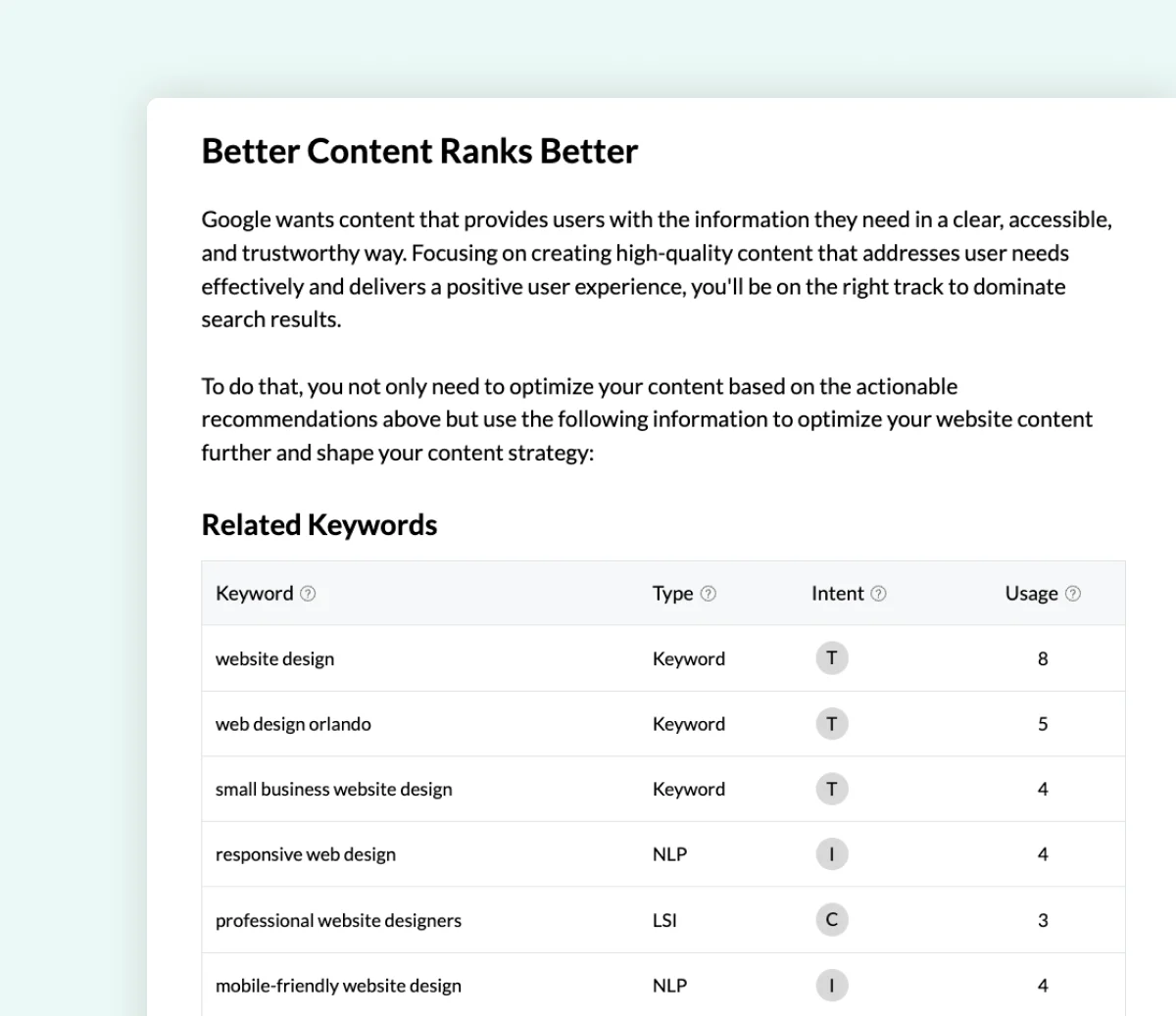
Publishing a 600-word service page with a few keyword mentions was enough to rank in 2015. In 2026, that content isn't competing for anything. The average top-ranking page for competitive keywords is well-researched, specific, and thorough.
Longer isn't always better, though. A 3,000-word post that answers the wrong question for the wrong audience is less useful than a 900-word post that directly answers what someone actually needs. Depth on the right topics matters. Word count for its own sake doesn't.
Content that earns rankings in 2026:
- Directly answers the search query in the first paragraph
- Goes deeper on the topic than what's currently ranking
- Includes specific details: local examples, real data points, named tools, concrete processes
- Is structured so that both human readers and AI systems can extract key information easily
E-E-A-T: The Framework Google Uses to Judge Your Content
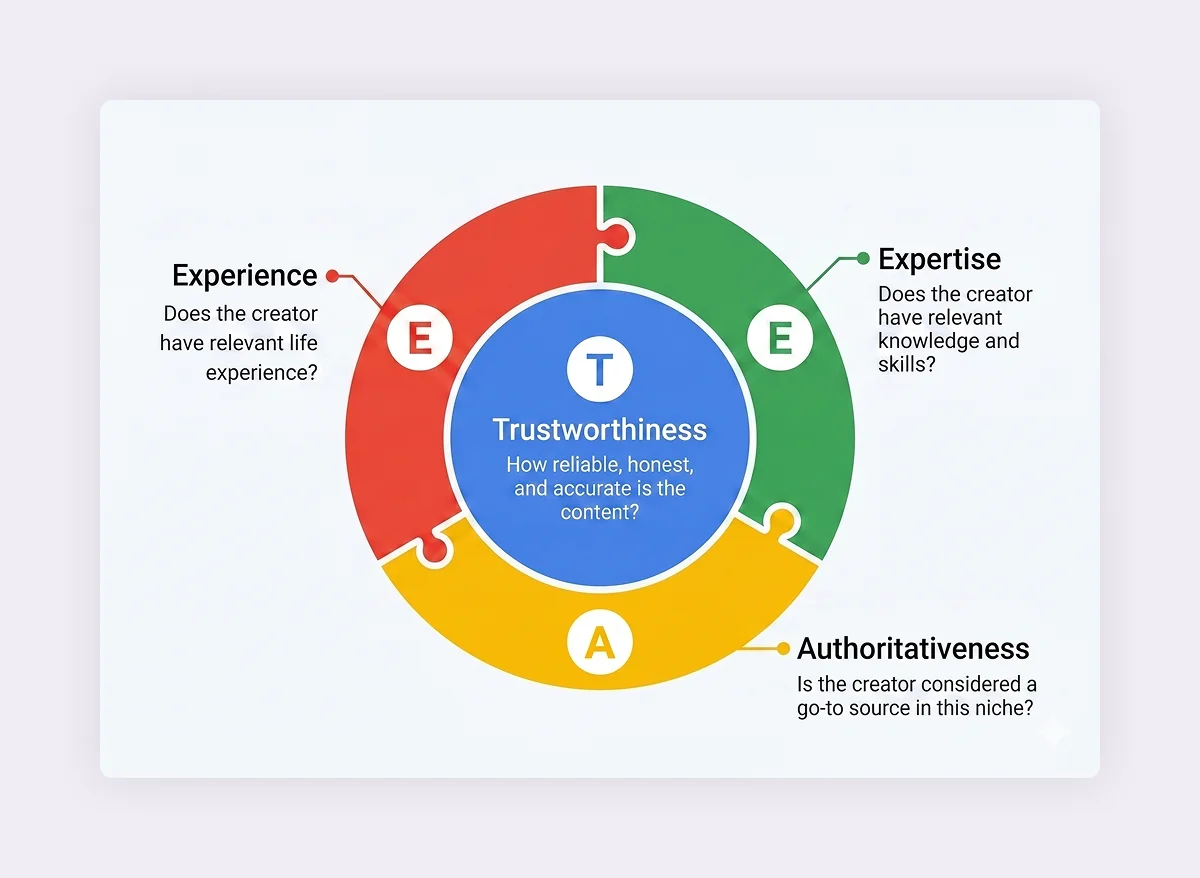
Google's quality guidelines are built around E-E-A-T: Experience, Expertise, Authoritativeness, and Trustworthiness. This isn't a checkbox you tick. It's a set of signals Google's systems use to assess whether your content and your business are worth surfacing to searchers.
Experience means first-hand knowledge. An Orlando contractor with 15 years of experience installing hurricane-resistant roofing in Florida carries more E-E-A-T than a content writer summarizing research they found online. The difference shows in the specificity.
Expertise means knowing your subject thoroughly. Demonstrated through depth and accuracy, not through listing credentials.
Authoritativeness means other credible sources acknowledge your expertise. Third-party mentions, links from credible sites, press coverage, industry affiliations, and reviews all contribute.
Trustworthiness means your business and content are reliable. A secure site, consistent contact information, clear policies, and a verifiable physical presence in Orlando all play a role.
For HireAWiz, trust signals include 25 years in business, 500+ websites built, an A+ BBB rating, UpCity Local Excellence Awards in 2022 and 2023, and My Web Audit, a platform used by hundreds of marketing companies worldwide to run website and SEO audits. Those aren't just claims. They're the kind of third-party verified signals that E-E-A-T scoring depends on.
Building E-E-A-T for your Orlando business means getting your proof points documented, cited by third parties, and reflected consistently across your website and business profiles.
One example of what this looks like over time: Todd Whittaker Drywall, a contractor we've worked with for over a decade, grew from a local operation with limited online visibility to generating more than $1 million in annual revenue from digital, with traffic up 600%. That result didn't come from one campaign. It came from consistently building the right signals: technical foundation, content, citations, and reviews. Over years. That's what real E-E-A-T looks like in practice.
Topic Clusters: The Structure That Builds Real Authority
Isolated blog posts don't build domain authority. Topic clusters do.
A topic cluster is a single, thorough pillar page for a broad topic, surrounded by multiple supporting articles that go in depth on specific subtopics, all linking back to the pillar.
An Orlando HVAC company might build a cluster like this:
- Pillar: "HVAC Services in Orlando, FL"
- Supporting posts: How often to service your AC in Florida, signs your AC needs replacing, average AC replacement cost in Orlando, how Florida humidity affects HVAC systems, what to do when your AC stops working mid-summer
Each supporting post links to the pillar. The pillar links to each supporting post. This interconnected structure tells Google that your site has organized, deep expertise on the topic. That's the foundation of topical authority.
Content Formats That Attract Links
Not all content types earn backlinks at the same rate. Research consistently shows certain formats outperform others:
- "What" and "Why" posts attract links because writers reference them as sources when they explain concepts.
- Original data and research. If you publish a study or data set that doesn't exist anywhere else, other sites will link to it when they cite it. For an Orlando business, that means local data that no one else has collected.
- Definitive how-to guides. Thorough resources that become the go-to reference on a topic earn links passively over time.
- Infographics. Visual summaries get shared and embedded by other sites, often with a link back to the original source.
Original local data is particularly valuable and almost entirely unclaimed in Orlando. A home services company that publishes "Average Home Renovation Costs in Orlando in 2026" or "What Florida Contractors Actually See During Hurricane Season" is creating something that local publications, real estate sites, and homeowner blogs will reference for years.
Building Backlinks the Right Way
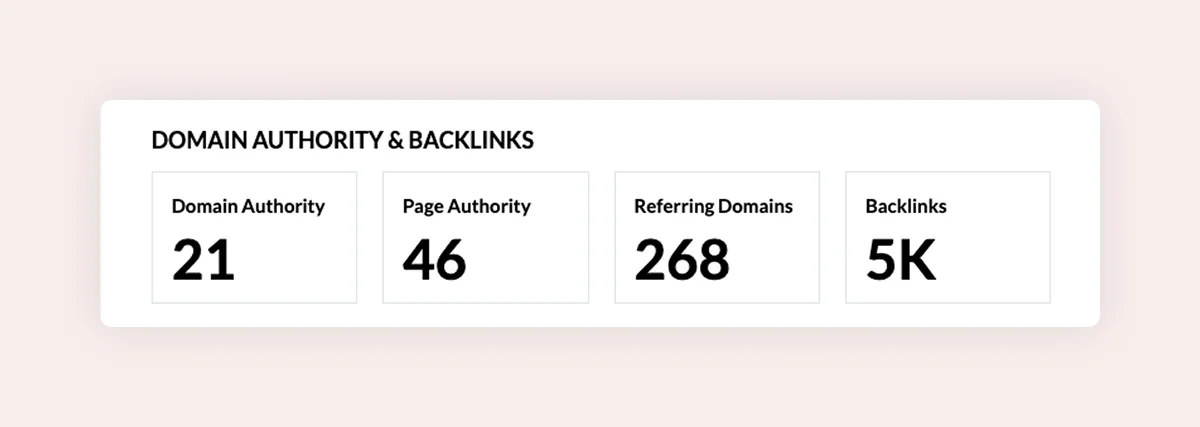
Links from other websites remain one of Google's strongest ranking signals. The shortcuts stopped working years ago. Buying links, link schemes, and private blog networks carry penalties that take years to recover from. Not worth it.
What actually works for Orlando businesses:
- Industry directory listings. Clutch, DesignRush, and GoodFirms for service companies. Houzz and Angi for home services. These are links with real domain authority.
- Local press. The Orlando Sentinel, Orlando Business Journal, and local TV station websites occasionally cover businesses with relevant expertise or interesting stories. One mention from a credible local outlet is worth dozens of directory listings.
- Sponsor local organizations. Many Orlando nonprofits, business associations, chambers of commerce, and events list sponsors with links. A sponsorship that includes a website mention is both a community investment and an SEO signal.
- Partnership links. Vendors, suppliers, and professional associations often list their members with links to their websites. If you're a member of something and your website isn't in their directory, ask. Usually takes one email.
- Create content worth referencing. Thorough guides, original research, and authoritative resources get cited by other sites. The investment compounds through the links it attracts over time.
Part 5: The Layer Most Orlando Businesses Are Ignoring
How Search Has Actually Changed
Something has shifted in how people find businesses. The shift is real, and it's happening faster than most business owners realize.
Google's AI Overviews now appear across a wide range of searches, putting AI-generated answers directly in results before any organic listings. One important nuance worth noting: AI Overviews appear in roughly 29% of all searches, but only about 7% of local queries. That's actually a structural advantage for local businesses. The AI answer is less likely to cost you a click when someone is searching for a local service. The bigger AI opportunity for Orlando businesses lies in standalone platforms like ChatGPT, Perplexity, and Gemini, where people ask for recommendations by category and expect specific names. A business can rank on page one of Google and still see fewer clicks than two years ago, because the AI answer was given before anyone reached the results. That's not speculation. It's measurable in Search Console traffic data across industries.
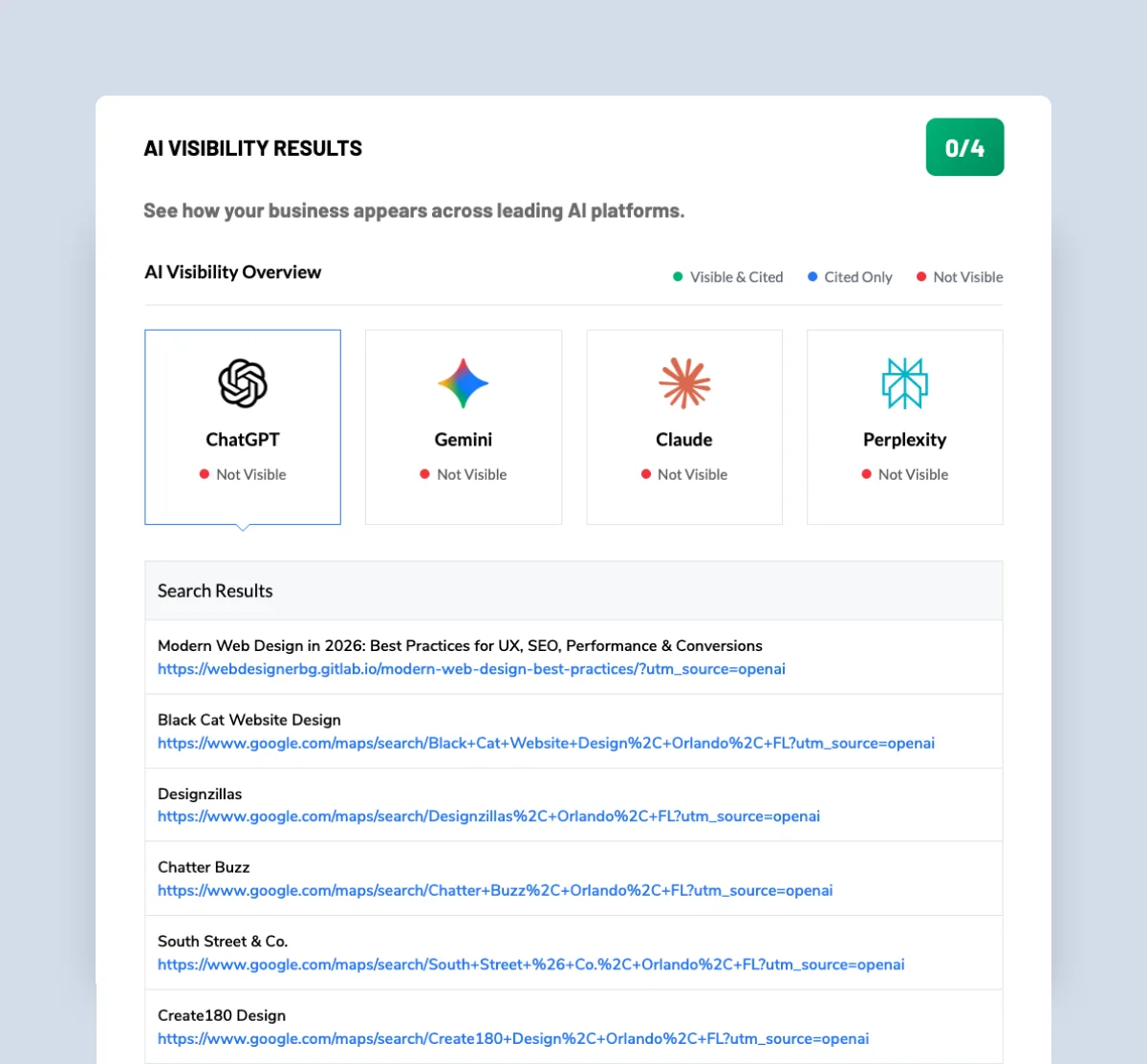
And then there are the AI platforms themselves. ChatGPT, Perplexity, Gemini, and Claude are now standard research tools. People asking "what's the best web design company in Orlando" or "which roofer should I hire in Central Florida" are increasingly getting answers from AI platforms that cite specific businesses by name. The businesses being cited are getting leads. The ones that aren't exist in a growing blind spot.
This is AI Visibility, what we call Answer Engine Optimization (AEO) and Generative Engine Optimization (GEO). In Orlando right now, this territory is almost entirely unclaimed.
What AI Platforms Look For
These platforms don't weight keywords the same way traditional search does. They're evaluating credibility signals: whether a business is real, established, and trustworthy enough to recommend to their users.
They look at:
- Schema markup that clearly defines what your business does and where it operates
- Consistent NAP information across your website and every directory
- Third-party citations: directory listings, press mentions, reviews, and external references to your business by name
- Content that directly answers the questions people ask AI platforms
- E-E-A-T signals, the same signals Google uses, but applied at a broader level
- A complete, accurate Google Business Profile (ChatGPT draws heavily from GBP data)
LLMs.txt: A New Technical File Worth Knowing
A new technical file, llms.txt, placed in your website's root directory tells AI platforms and large language models which pages on your site are authoritative, how your content is structured, and what topics your site covers. Think of it like robots.txt, but written for AI crawlers rather than traditional search bots.
For Orlando businesses building AI visibility, adding a well-structured llms.txt file is one of the lower-effort technical steps available right now. As AI platforms become more deliberate about how they crawl and cite web content, this file will matter more, not less.
The Orlando Window Is Open Right Now
We've run AI visibility audits for businesses across competitive Orlando service categories. The finding is consistent: zero to one Orlando businesses had any meaningful AI platform visibility for their core service keywords. No competitor in most categories has done this work yet.
The businesses that build AI visibility now will have a structural advantage that compounds. Unlike paid advertising, which stops the moment you stop paying, visibility built through credible signals and authoritative content is durable.
We built a proprietary AI Visibility Audit that shows exactly how your Orlando business appears across ChatGPT, Gemini, Perplexity, and Google AI Overviews, and what it takes to show up where your competitors don't. Get your free AI Visibility Audit.
Measuring What Matters
Three Numbers Worth Tracking
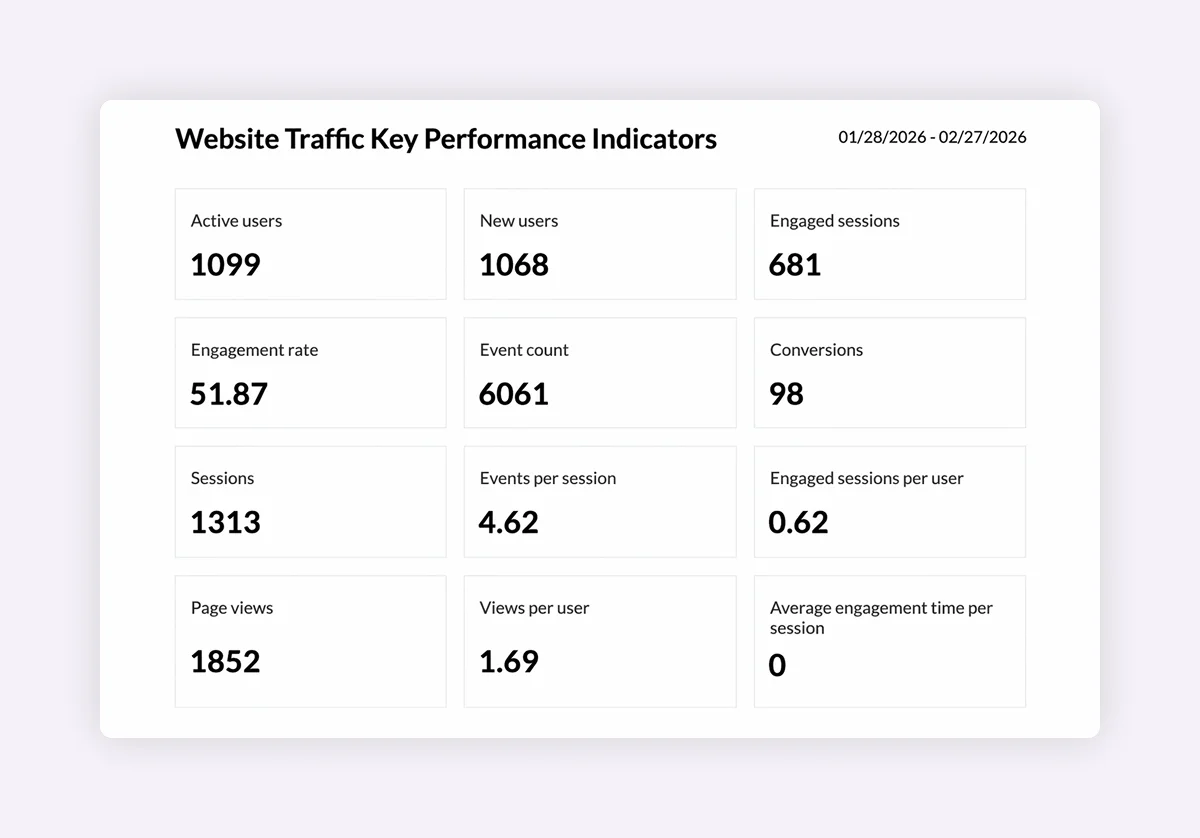
SEO reporting gets complicated quickly. The core of it is actually simple. At any point, you should be able to see three things clearly:
Organic traffic trend. Is the number of visitors arriving from search going up, flat, or down over the past 90 days? Tracked in Google Analytics 4 (GA4). Create an exploration report filtered by city (Orlando) to separate local organic traffic from any national reach and keep your local performance metrics clean.
Keyword ranking movement. Are the keywords you're targeting moving toward page one, holding steady, or slipping? The Performance report in Google Search Console shows this.
Lead source. Of the leads your business received this month, how many came from organic search? If you can't answer this, your tracking needs attention before anything else.
If your current SEO company can't show you these three things in plain language and tie them to business outcomes, that's worth addressing.
How Long Does This Take?
Honest answer: three to six months for real movement on moderate-competition keywords. Six to twelve months for meaningful impact in a competitive Orlando market. Anyone promising page-one rankings in thirty days is either misinformed or about to do something that will eventually earn your site a penalty.
The timeline moves faster when:
- Your site's technical foundation is solid from the start
- Your Google Business Profile is complete and active
- Your content is genuinely better than what's currently ranking
- Your citation profile is clean and consistent
It slows down when you're starting with technical debt, a neglected GBP, no existing domain authority, or a history of low-quality link building that needs to be cleaned up first.
Where to Start
Start with the foundation. Before any content strategy, before link building, before anything else: make sure your site passes Core Web Vitals, your schema reflects your Orlando location correctly, your Google Business Profile is fully built out, and your core service pages are properly built.
That work alone will separate you from most of your local competitors, who never get past step one.
Get Your Free Website Audit.
We'll evaluate your site's foundations, SEO performance, and AI visibility across ChatGPT, Gemini, Perplexity, and Claude. No jargon. No pressure. Just a clear picture of where you stand and what to do next.

Related Articles
Business owners trying to get more visibility ask me one question more than any other. People just starting to learn…
A prospect named Marie asked me a sharp question last week. She works for a financial institution here in Florida,…
I gave a presentation last week to a company weighing whether to invest in SEO and AI search visibility. The…
Ready to Find Out Where You Stand?
No pitch. No pressure. Just a conversation about what's working, what's not, and where the opportunity is.
The AI Visibility Audit is free and shows you exactly how your business appears across ChatGPT, Perplexity, Claude, and Gemini before you invest a dollar.

5.0


